


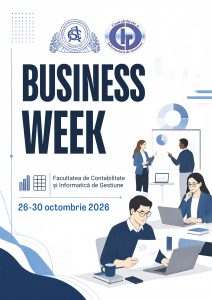
(RO) Conectăm teoria cu practica: Săptămâna „Business Week” la CIG
Facultatea de Contabilitate și informatică de gestiune lansează prima ediție a proiectului Business Week, o inițiativă prin care deschidem amfiteatrele către profesioniști de top din mediul de afaceri.
Pe parcursul acestei săptămâni, orarul obișnuit al studenților va fi îmbogățit prin prezența unor invitați speciali din mediul de afaceri, care vor susține prelegeri aplicate alături de cadrele didactice titulare, aducând o perspectivă practică direct în cadrul cursurilor.
Prin aducerea experților direct la catedră, inițiativa le oferă studenților oportunitatea de a conecta noțiunile teoretice cu provocările reale din industrie:
- Analiză aplicată și studii de caz: Discuții interactive pe marginea unor situații concrete din contabilitate, audit, consultanță fiscală, raportare financiară, analiză de date și transformare digitală.
- Perspectivă din interiorul profesiei: Înțelegerea cerințelor actuale ale angajatorilor, a metodologiilor moderne de lucru și a tendințelor care redefinesc domeniul financiar-contabil.
- Dialog direct și mentorat: Sesiuni deschise de întrebări și răspunsuri, în care studenții pot afla ce presupune o carieră de succes și pot stabili primele conexiuni profesionale cu experți din companii românești sau internaționale.
Păstrând structura cursurilor, dar transformându-le în masterclass-uri interactive, Facultatea de Contabilitate și informatică de gestiune își reconfirmă angajamentul de a le oferi studenților o pregătire academică modernă, relevantă și strâns aliniată la cerințele pieței muncii!
(EN) Bridging Theory and Practice: „Business Week” at CIG
The Faculty of Accounting and Management Information Systems (CIG) is launching the first edition of the Business Week project, an initiative through which we open our lecture halls to top business professionals.
Throughout this week, students’ regular academic schedules will be enriched by guest speakers from the corporate sector, who will deliver applied lectures alongside lead professors, bringing a practical perspective directly into the classroom.
By bringing experts straight to the podium, this initiative offers students the opportunity to connect theoretical concepts with real-world industry challenges:
- Applied Analysis and Case Studies: Interactive discussions based on concrete scenarios in accounting, auditing, tax advisory, financial reporting, data analytics, and digital transformation.
- Industry Insights: A clear understanding of current employer expectations, modern working methodologies, and key trends reshaping the financial and accounting sector
- Direct Dialogue and Mentorship: Open Q&A sessions where students can learn what it takes to build a successful career and establish initial professional connections with experts from Romanian and international companies.
While maintaining the standard course structure, transforming lectures into interactive masterclasses reasserts the Faculty of Accounting and Management Information Systems’ commitment to providing students with modern, relevant academic preparation closely aligned with labor market demands!


(RO) Stimați studenți,
Vă invităm să consultați temele propuse pentru lucrarea de disertație. Temele au rol orientativ.
Program de masterat AFE – AEEF Teme masterat RO 2027
Program de masterat CAIG EN – CIG_CAIG EN_Teme disertatie 2027 – v2
Program de masterat CAIG RO – CIG_CAIG_RO_Teme disertatie 2027
Program de masterat CCE – CIG_CCE_Teme disertatie 2027
Program de masterat CFEE – CIG_CFEE_Teme disertatie 2027
Program de masterat CI – CIG_CI_Teme disertatie 2027 – v2
Program de masterat CPA – CIG_CPA_Teme disertatie 2027
Program de masterat IG – CIG_IG_Teme disertatie 2027
Cererea pentru alegerea temei și a coordonatorului este disponibilă, în format editabil, aici: RO-_-EN-_Cerere-alegere-tema-Disertatie-Application-form-_sesiune-iulie-2027
Cererea NU trebuie semnată de coordonator.
Cererea completată se încarcă aici: Cereri disertatie 2027
Termenul pentru încărcarea cererii este 30 noiembrie 2026.
Ghidul lucrarii de disertatie este disponibil aici: Ghid-lucrari-licenta-si-master_cf-regulament-ASE
Regulamentul privind organizarea și desfășurarea examenului de finalizare a studiilor universitare de masterat este disponibil aici: Regulament .
Orice neclaritate se discută cu secretariatele departamentelor ale căror date de contact sunt:
- Departamentul ANALIZĂ ȘI EVALUARE ECONOMICO-FINANCIARĂ – Clădirea Mihai Eminescu, sala 1016, parter. Program cu publicul: L-J: 9.00 – 14.00; V: 9-12. Tel. 021.319.19.00, interior 335.
- Departamentul CONTABILITATE ȘI AUDIT – Clădirea Mihai Eminescu, sala 1018, parter. Program cu publicul: L-J: 9.00 – 14.00; V: 9-12. Tel. 021.319.19.00, interior 177.
- Departamentul INFORMATICĂ DE GESTIUNE – Clădirea Mihai Eminescu, sala 1018, parter. Program cu publicul: L-J: 9.00 – 14.00; V: 9-12. Tel. 021.319.19.00, interior 177.
Succes!
(EN) Dear students of master programs,
Please consult the themes proposed by professors for dissertation.
Master programme CAIG EN:
The form, in word format, is available here: RO-_-EN-_Cerere-alegere-tema-Disertatie-Application-form-_sesiune-iulie-2027
Submit your form until November 30th, here: Cereri disertatie 2027
The disertation guide is uploaded here:Ghid-lucrari-licenta-si-master_cf-regulament-ASE
The ASE regulation regarding the Disertation exam is uploaded here: Regulament .
The addresses of administrative offices and working hours are:
- FINANCIAL ANALYSIS AND VALUATION Department – Clădirea Mihai Eminescu, room 1016, ground flour. Schedule: Monday – Thursday: 9.00 – 14.00; Friday: 9.00-12.00. Tel. 021.319.19.00, interior 335.
- ACCOUNTING AND AUDITING Department – Clădirea Mihai Eminescu, room 1018, ground flour. Schedule: Monday – Thursday: 9.00 – 14.00; Friday: 9.00-12.00. Tel. 021.319.19.00, interior 177.
- MANAGAMENT INFORMATION SYSTEM Department – Clădirea Mihai Eminescu, room 1018, ground flour. Schedule: Monday – Thursday: 9.00 – 14.00; Friday: 9.00-12.00. Tel. 021.319.19.00, interior 177.
Good luck!


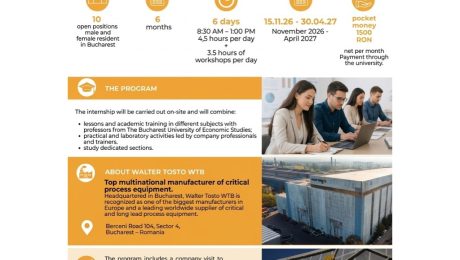
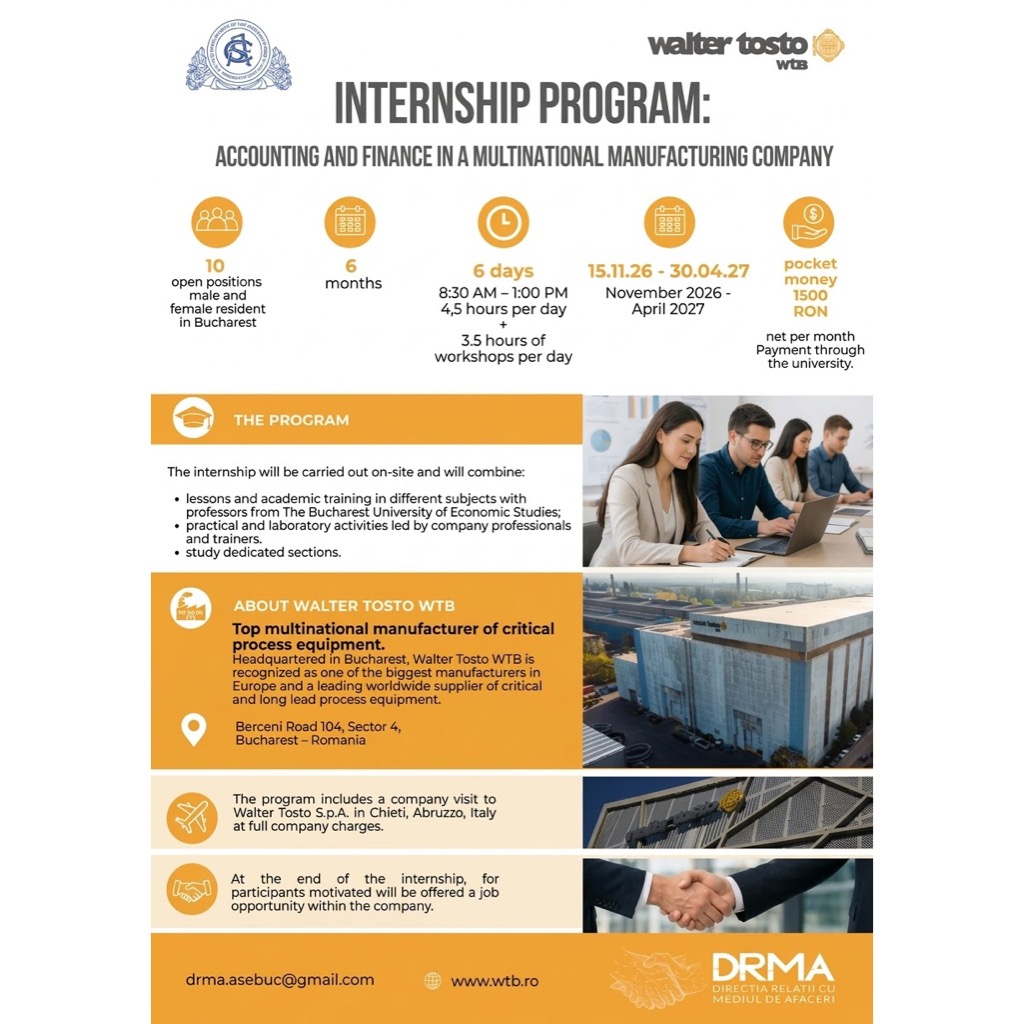
Ești student masterand în domenii precum finanțe, audit, contabilitate sau resurse umane și vrei experiență într-o companie multinațională? Aplică acum!
📅 Perioada: 15 noiembrie 2026 – 30 aprilie 2027 (6 luni)
📍 Locație: on-site, București
💼 Domenii: contabilitate, finanțe, resurse umane
✨ Ce primești:
✅ bursă de internship de 1500 lei/lună
✅ training-uri, workshop-uri și proiecte practice alături de profesioniștii companiei
✅ vizită la sediul Walter Tosto S.p.A. din Chieti, Italia, cu toate costurile acoperite
✅ posibilitatea unei oferte de angajare la final
👥 Doar 10 locuri disponibile!
📩 Cum aplici: trimite CV-ul, scrisoarea de motivare și foaia matricolă, într-un singur PDF numit NUME Prenume student_Facultatea_Aplicatie WTB, la drma.asebuc@gmail.com
⏰ Termen limită: 25 octombrie 2026


Dragi studenți,
Vă invităm să vă alăturați proiectului Eco Succes, dedicat studenților din anul II din cadrul ASE, cu domiciliul în București-Ilfov, care oferă o oportunitate concretă de dezvoltare profesională și personală prin stagii de practică relevante și activități dedicate formării voastre complete.
Participarea în cadrul proiectului vă va aduce o serie de beneficii valoroase, menite să vă pregătească pentru provocările pieței muncii și pentru inițiative antreprenoriale de succes.
Ce veți obține prin participare:
 Stagii de practică în parteneriat cu organizații și companii relevante
Sesiuni de mentorat antreprenorial, pentru dezvoltarea gândirii de afaceri și inițiativelor proprii
Mentorat socio-emoțional, pentru susținerea echilibrului personal și profesional
Ateliere interactive și activități aplicate
Certificat de participare, util pentru CV și portofoliul profesional
Acces la o comunitate activă de tineri motivați și mentori cu experiență
Calendarul activităților este următorul:
- până la 23 octombrie 2026 – înscrierea preliminară a studenților;
- până la 1 noiembrie 2026 – contactarea studenților selectați și semnarea documentelor necesare;
- noiembrie–decembrie 2026 – repartizarea și desfășurarea stagiilor de practică;
- ianuarie 2027 – evaluările și concursurile aferente programului.
Formular de înscriere preliminară:
Completează formularul de înscriere
Pentru mai multe informații despre proiect accesați site-ul proiectului: ECO-SUCCES
Este momentul să faceți un pas important spre viitorul vostru profesional.
Vă așteptăm cu drag în echipa Eco Succes!